Day Trading for Beginners: Where to Practice Before You Risk Money

Day trading for a beginner has a problem that no amount of reading solves.
The skill is repetition. You need to see the first hour of a session over and over, in different markets and different conditions, until the shape of it stops being surprising. But every repetition in a live account costs money, and the first hundred are exactly the ones you know least about.
So the first question is not which broker, and it is not which strategy. It is where you can take the same hour a hundred times without paying tuition on each one.
That is what a replay is for.
What a beginner actually needs
Four things, and any of them missing makes the practice misleading:
- Intraday bars. A day trader's decisions happen inside the hour. Daily candles will not show you the 10:00 reversal or the slow drift before lunch.
- A hidden future. The chart has to stop where your decision does. If you can see what happened next, you are reading, not trading.
- Real costs. Commission and spread come off every trade you take. Practice that ignores them is practice for a market that does not exist.
- A record. Something has to tell you what you actually did, because your memory of a session is generous.
Replay the session, not the year
In Tradebreath you pick a market, pick a day, and the chart opens with everything to the right of it blanked out. From there you move forward one bar at a time — hold the arrow key to walk through the hour, or step through it deliberately when something is happening.
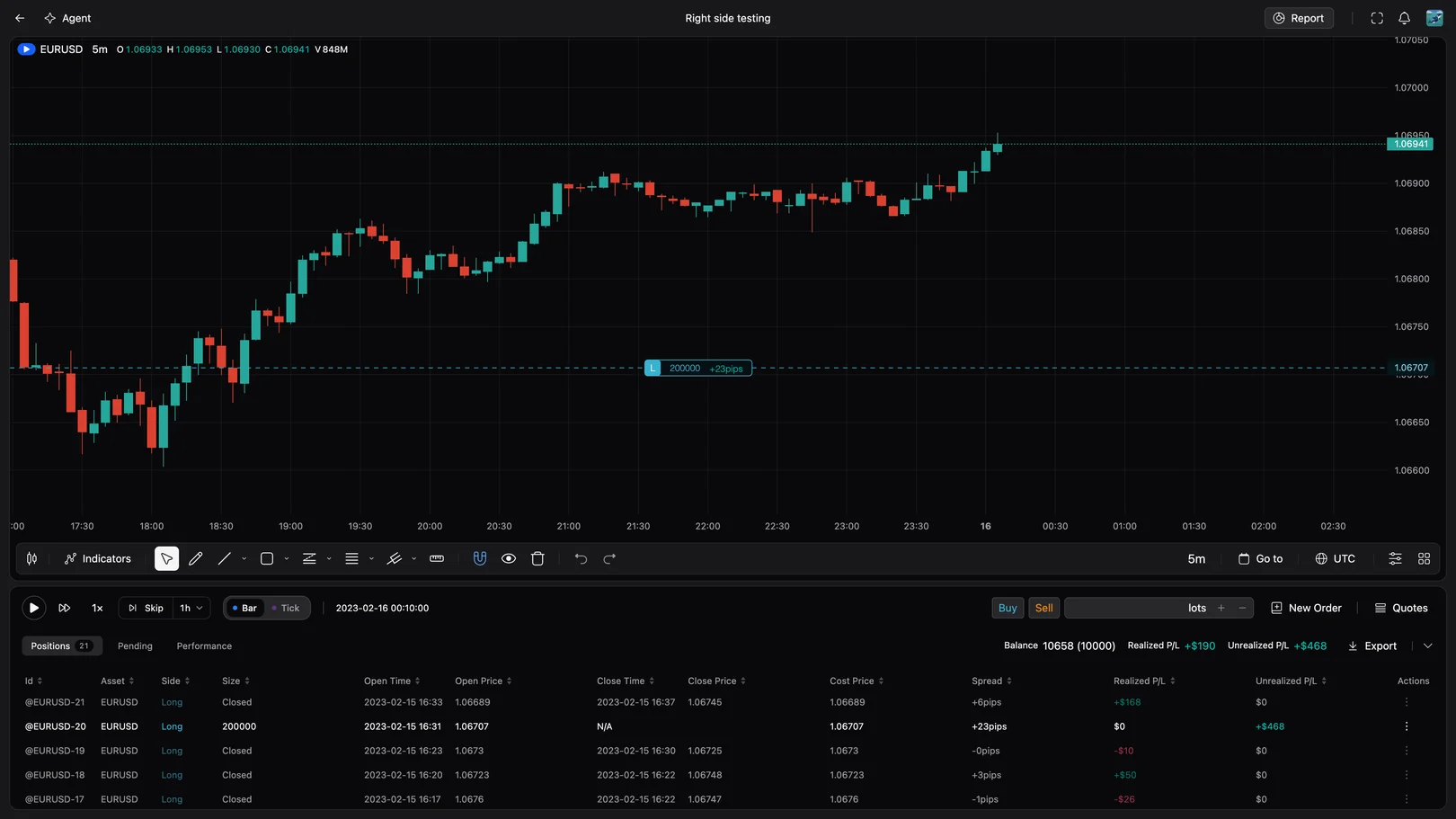
Nobody is timing you. The point of the first few weeks is not speed; it is seeing the same setup in a hundred slightly different forms until you know what it usually does next. A session that would take six hours in real life takes twenty minutes here, and you can repeat that session on five different days before lunch.
Tick by tick, when a pip of timing matters
On a one-minute bar, two unlike things look identical: a price that ground up through your level, and one that wicked through it once and left. Scalping is made of that difference.
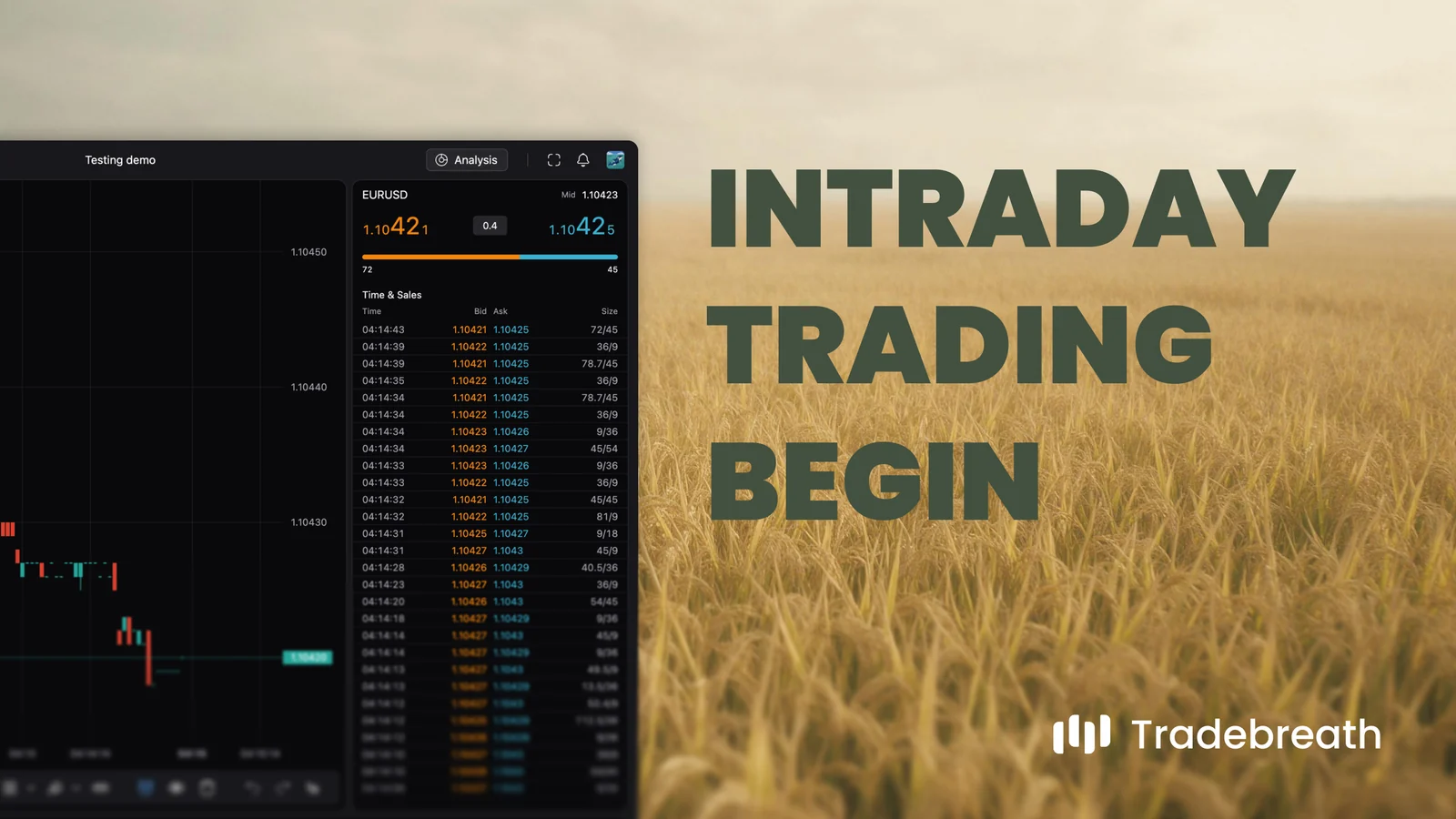
Tick replay runs on a one-second chart with the tape beside it — every print, with the bid, the ask and the size that traded — so you can see how the price got where it went instead of only where the bar closed. It is part of the Pro plan.
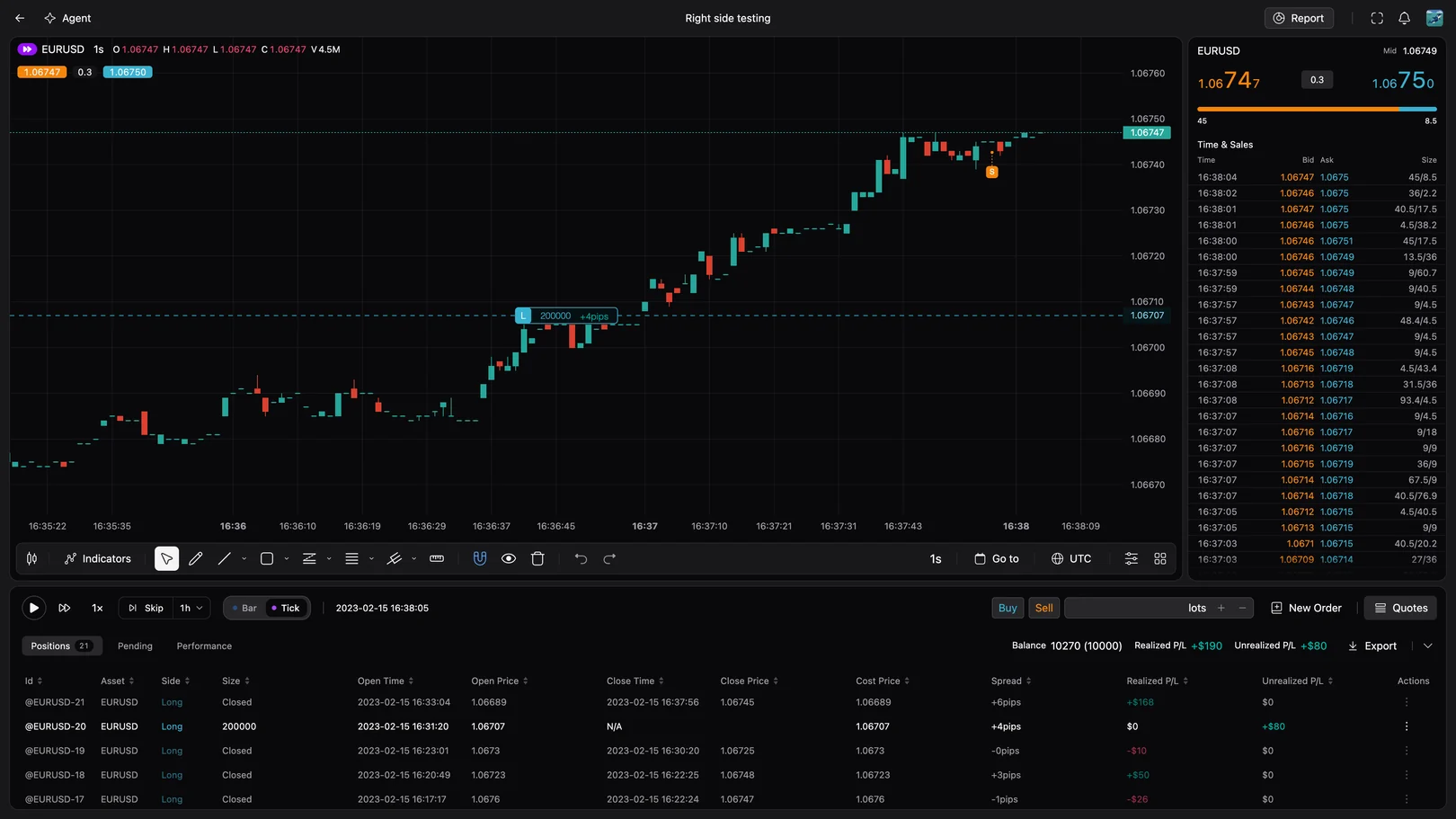
Watching the tape also kills a beginner's worst assumption, which is that a fill was available. A level that looks clean on a five-minute chart can be a queue of prints nobody would have got in front of.
Costs are part of the drill
Before a session you set what it will be charged: the balance the run starts with, and the spread and commission taken on every fill. Set them the way your broker would.
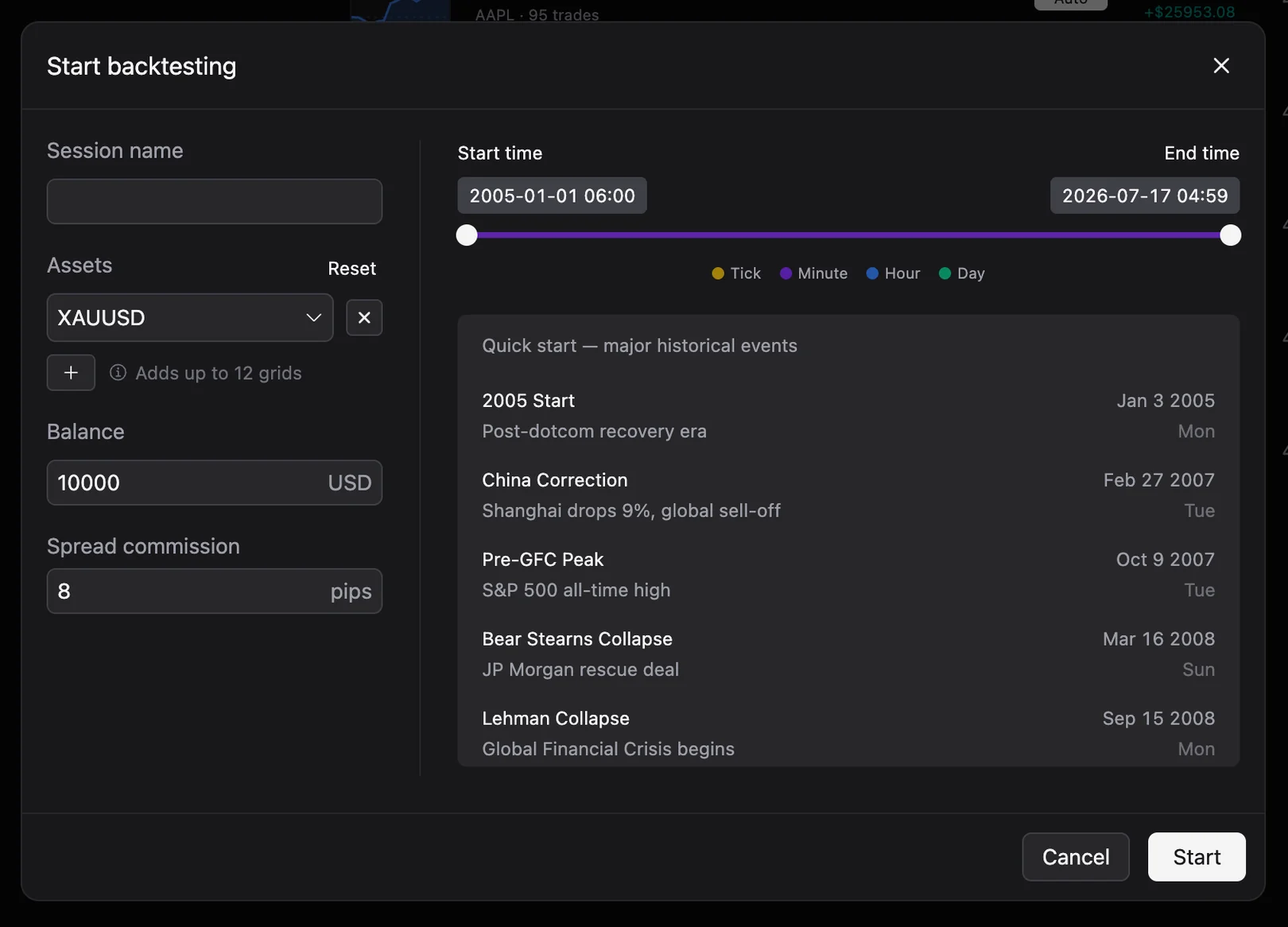
It is tempting to leave them at zero, because at zero your equity curve looks better. But the arithmetic is unforgiving for a day trader: six trades a day at a spread of one pip on a standard lot is sixty dollars a day before you have made anything — about $1,200 a month. A beginner who practices without costs is learning a version of day trading with a monthly salary attached that nobody is paying.
Inside the replay, those numbers are charged on every fill, exactly as they would be live.
Orders the way you would place them
The order ticket is not a simplified version of a broker's. It takes a size, a market, limit or stop entry, and a stop and target attached to the position.
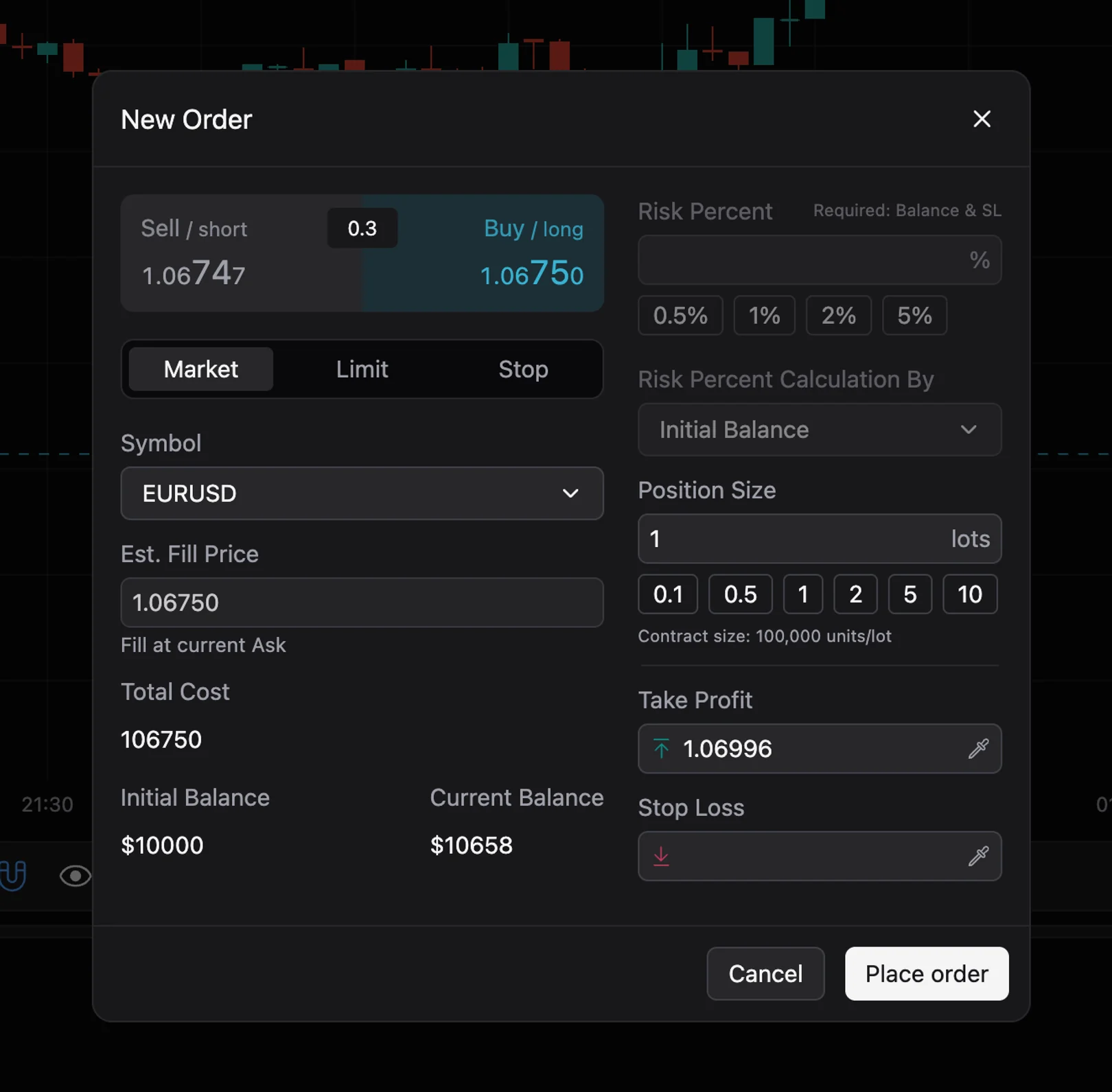
Pending orders sit on the book as the replay moves forward, so a limit order you placed at 09:40 fills when the chart reaches it, not when you notice. Positions can be closed, scaled out, or have their stop moved, and the panel keeps the running P&L of everything open.
More than one chart
Day traders rarely watch one market. Correlated pairs move together, and an index moves with its heaviest names.
Tradebreath runs charts in a group: one replay clock drives all of them, so you can watch EURUSD and GBPUSD take the same session at the same time, or hold a stock beside the index it belongs to. The free plan runs two charts side by side; Pro removes the limit and adds custom timeframes.
The part you read afterwards
When a session ends, the report opens. It is the part most beginners skip, and it is the part that turns practice into something you learn from.
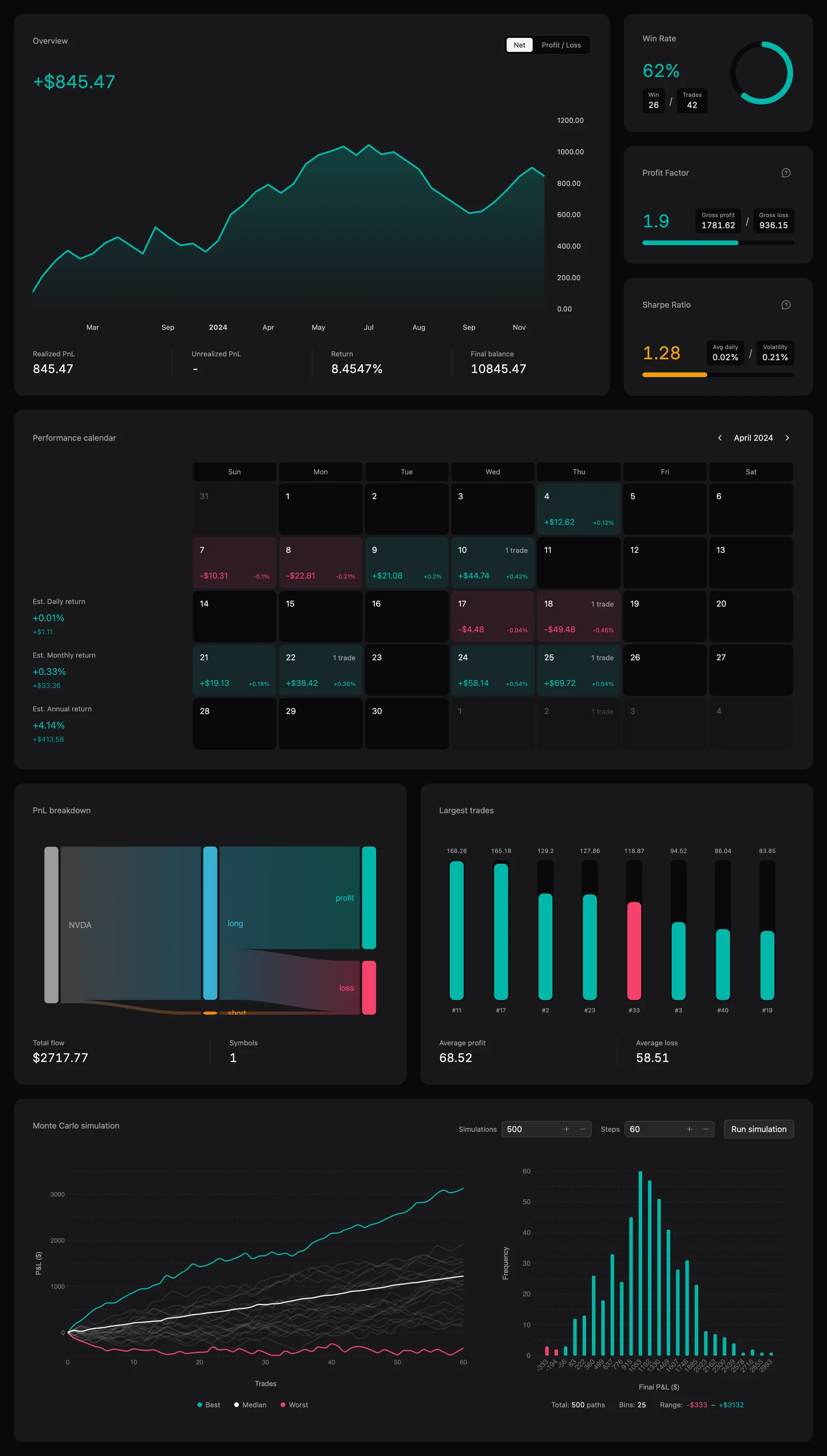
You get the P&L line and the number it ends at, win rate, profit factor, drawdown, the average day and how much the days disagree with it. A calendar shows what each trading day did, with how many trades closed that day, so thirty sessions of five-minute scalping read as a month rather than a blur.
Two things are worth doing with that report, both of them free of charge and both of them uncomfortable. Open the trades list and find the three worst decisions; they are almost always visible. Then run the same session again tomorrow and see whether the pattern repeats — if it does, it is yours, and you can start fixing it.
Where it starts
There is no sign-up and no card to start practising. The free plan covers 20 markets, one-minute bars, two charts side by side and ten trades per session, with history through 2025. Pro adds the rest: 800+ symbols, data up to today, tick data, twelve charts and unlimited trades.
None of that is the point of this post, though. The point is that a beginner's first month of day trading should cost one thing: the hours you put into it. Everything else on the list can wait until the practice has something to say.
What this cannot give you
A replay cannot give you the live clock or a fill that slips when the market is fast. It will not make you money, and it is not a broker. What it does is let you find out whether your idea survives a hundred repetitions, in the one period of your trading life when being wrong is free.